Landlords Beware: Court Delays Hit Eight Months—Fast Sales Offer a Smarter Route

Court Backlogs: A Growing Nightmare

Recent Ministry of Justice figures reveal that landlords are now facing an average wait of 33.8 weeks—nearly eight months—between filing a claim and regaining possession of their property. This is the worst delay since early 2022, and it comes despite a drop in court claims overall.

The NRLA warns of an impending “disaster waiting to happen,” especially as the Renters’ Rights Bill—which abolishes no-fault Section 21 evictions—is expected to flood the courts with even more claims.

What’s Causing These Delays?

  • Abolition of Section 21 means every case now requires court intervention, hugely increasing the workload.
  • Inconsistent regional efficiency, with some areas already experiencing eviction delays stretching to 18 months or more.
  • Bailiff and court staff shortages, further slowing down processes.

Real Life Experience

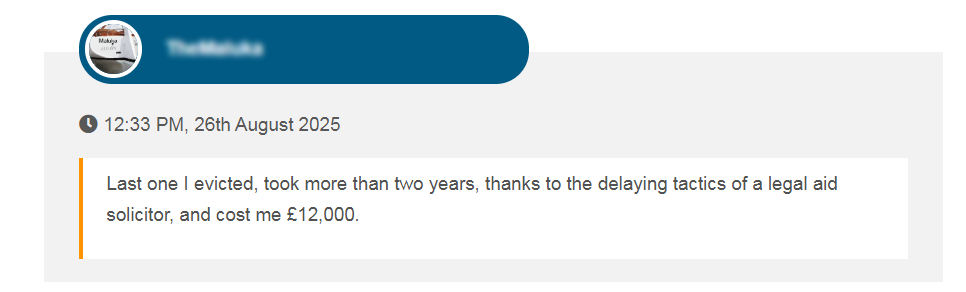
A landlord commenting on the Property118 article ‘Court delays leave landlords waiting eight months to reclaim properties‘ added “Last one I evicted, took more than 2 years, thanks to the delaying tactics of a legal aid solicitor , and cost me £12,000”

Why Now Is the Time to Consider Selling

  • Beat the upcoming Autumn Budget—potential tax rises could apply to capital gains or rental income, eating into future returns.
  • September advantage—as holidays end, motivated buyers re-enter the market, eager to complete ahead of Christmas.

If the legal path is clogged and tax pressures loom, a fast property sale could be both a strategic and financial safeguard.


Landlord Sales Agency: Fast Solutions for Stressed Landlords

When the courts fail, Landlord Sales Agency steps in with a hassle-free exit:

  • Lightning-fast process: Skip court, avoid waiting months—complete your sale in days, not weeks.
  • Reliable offers: Get a fair cash offer quickly, allowing you to move on with confidence.
  • No court involvement: Eliminate reliance on an overburdened legal system.
  • Clear financial planning: Avoid potential tax hikes and uncertainty around court schedules.
  • Supportive service: Expert guidance throughout, from initial offer to transfer completion.

Final Thought

With eviction delays now stretching to eight months—or longer—and more reforms on the horizon, landlords are right to feel frustrated. Add in the possibility of new Autumn Budget taxes, and the future becomes even less certain.

If you’re a landlord who’s had enough, selling your property fast with a trusted partner like Landlord Sales Agency could save you months of wait time—and thousands of pounds.

Don’t wait months for possession or risk losing thousands to future tax rises.

Contact us today if you want to sell fast, secure today’s value, and move on without the stress of court backlogs.

Get your free cash offer today — complete in as little as 7 days.

As sellers’ market picks up, not even fire and structural damage can stop us selling properties in under 2 weeks

In what seems like a change of the tide, the property market has shown signs of swinging in favour of landlords this month. Following what looked like a tricky time for landlords trying to sell their ex-rentals, it seems that buy-to-let properties are back in demand, and they’re selling fast.

Last week we shared the news that we had been able to secure a buyer for a landlord based in Leicester, with tenants in situ, in only 16 days and that we completed on her purchase within 15 days of the offer being accepted. This week has followed the same trend, in particular with us selling freehold houses in as little as 7 to 14 days.

When a Manchester-based landlord approached us needing to shift his houses, we knew we’d be able to deliver. Like many landlords looking to sell this year as a result of changes to regulations, talk of rent caps, abolishment of Section 21 no-fault evictions, the Renters’ Rights Bill and more, he wanted to sell fast, but he didn’t want to take a huge hit on the price.

He came to us with 6 houses, 4 tenanted. One of them had major structural problems due to fire damage, making traditional mortgage financing impossible for potential buyers.

He chose Landlord Sales Agency because he knew that speed was crucial, but he also wanted to maximise his returns.

Our team of experts did what we do best, taking on the portfolio and immediately marketing it to our private database of buyers, as well as property buying funds and investors.

We sold the first property in 22 days. The second in 9 days. The third in just 7 days. And the rest followed in rapid succession.

For the one with the structural problems due to fire damage, we secured a cash buyer as mortgages had been declined from lenders, selling it just as fast as the rest.

Perhaps most impressively, we achieved prices £10,000 above expectations across the portfolio, enabling us to cover all legal costs and negotiate smooth transitions with the existing tenants. Only one eviction was necessary, in every other case, tenants remained in their homes under new ownership, creating genuine win-win outcomes for everyone involved.

The landlord even decided to sell his final property to his son, completing his total exit from the rental market exactly as planned.

Where everyone else is struggling to sell, we’re knocking it out of the park, and we’re doing it every single week.

Whatever condition your portfolio is in, we’ll sort it, fast, for the best price possible, and completely hassle-free. We take landlord portfolios, navigate every legal and logistical hurdle, and deliver results that exceed expectations.

Ready to sell with maximum return and zero stress? Get in touch today.

What Rachel Reeves’ Property Tax Plans Could Mean for Landlords and Tenants

The Proposal

Chancellor Rachel Reeves is looking at a big shake-up of how property is taxed in the UK. The Treasury faces a budget gap of around £40–51 billion, and housing is firmly in the spotlight.

Some of the ideas being considered include:

  • Ending the capital gains tax exemption on very expensive homes (those worth over about £1.5 million). At the moment, if you sell your main home, you don’t pay CGT. Reeves may change that so that a slice of the profit is taxed.
  • Introducing a new annual tax on expensive homes, sometimes called a “mansion tax”. For example, this could be a percentage charge each year on properties worth more than £500,000.
  • Replacing outdated council tax and stamp duty with a new property tax based on up-to-date house values. At the moment, council tax is based on valuations from the 1990s, so people in cheaper homes often pay a bigger share of their income than those in expensive homes.

Nothing has been confirmed yet, but the Budget this autumn is expected to reveal more.

The Implications to Landlords

A Risk of Double Payments

Right now, tenants usually pay council tax, while landlords pay stamp duty when they buy a property. If Reeves introduces a new property tax for owners without scrapping council tax for tenants, both sides could end up paying on the same property — tenants paying their share through council tax and landlords paying a separate tax on top.

Higher Costs and Lower Profits

If landlords suddenly face a new yearly property tax (on top of the income tax and other costs they already pay), it will naturally make it harder for them to make money from renting without putting rents up to cover the added costs. But many tenants are already stretched to their limits and will not be able to afford more rent increases. This ‘affordability ceiling’, together with proposed rent caps being introduced in The Renters’ Rights Bill, will make it even harder for landlords to make a profit in the Private Rental Sector (PRS).

Slower Property Price Growth

If even more landlords decide the numbers no longer stack up and sell their properties, as widely expected, there may be a tsunami of ex-rental homes going to market. While landlords selling multiple properties in the same area at the same time as other landlords selling similar properties, may have an immediate downward impact on property prices, the biggest impact of a huge rise in ex-rental property flooding the UK market is likely to be to those landlords whose main financial motivation has been building up equity (rather than rental profit).

Historically, for many landlords, being a landlord was a long term way to buy property and sell 10+ years later at a much higher price due to unprecedented demand and huge price growth.

A general cooling of the housing market, coupled with economic uncertainty, has led to decreased overall demand in property demand which is impacting property price growth forecasts. If property prices do not increase at the same rate as inflation, its real value decreases and many landlords who have previously enjoyed much higher periods of annual growth peaking at 14 percent in July 2022, may feel the hassle of being a landlord is no longer a worthwhile and viable long term plan to grow their money as reliably as other options. 

The UK annual inflation rate, measured by the Consumer Prices Index (CPI), was 3.8% in July 2025 while UK property prices saw a 3.9% annual increase between May 2024 and May 2025, with a 0.5% rise in the 12 months before that. However, there was a period of slower annual price growth in late 2024 and early 2025, with some forecasts predicting only modest gains for the rest of 2025. Regional variations exist, with the North of England seeing stronger growth than the South. 

The Implications to Tenants

Will Tenants Still Pay Council Tax?

At the moment, tenants are responsible for paying council tax (except in HMOs, where the landlord pays). Unless the government scraps council tax completely, that system is unlikely to change in the short term. However, if council tax is eventually replaced with a new property tax, the question is who will be asked to pay it — the tenant or the landlord? That detail will be critical.

Possible Rent Rises

If landlords face extra taxes, many will try to pass some of the cost onto tenants by putting rents up. Others might leave the rental market altogether, reducing supply and driving rent prices up further. Either way, renters may feel the squeeze.

Final Thoughts

Reeves’s tax plans are still at the discussion stage, but they could have a big impact on both landlords and tenants.

Smaller landlords in the private rented sector (PRS) are likely to feel these changes more than the big players. Many small landlords still have mortgages and rely on steady rent payments to cover their costs while slowly building up equity in their properties. That means new taxes directly eat into their monthly margins, and because tenants can only afford so much, there’s a limit to how much of those costs can be passed on.

Larger landlords, by contrast, often own their properties outright and view them as long-term income assets. They are less reliant on price growth or tenant affordability to make the numbers work, so they can absorb changes more easily.

In short, the small landlord who sees property as their retirement plan is far more exposed than the institutional investor with a portfolio that already pays for itself.

The crucial question is whether Reeves will replace council tax or simply add another tax on top. If it’s the latter, both landlords and tenants could end up paying more on the very same property.


Below market rents, no EPCs, poor conditions and council fines: We Still Sold These Properties in 15 days

Despite moments of silver lining, I think we all agree it’s a tough market for landlords. With changes to regulations, rent caps, abolishment of Section 21 no-fault evictions, the Renters’ Rights Bill and more, it’s no surprise that so many landlords are still thinking of selling.

For a landlord based in Leicester, that’s exactly the decision she came to after being a successful landlord for over 35 years.

Despite trying to keep up with the times and changes, she’d understandably had enough. Her properties, although occupied with tenants, hadn’t had their rents raised in 10 years. In one property, the tenants had been paying £480 per month when the market rate had raised to £850. A decade of losing money.

What’s more, the property was in poor condition, had no electrical certificate, no EPC and was at risk of fines from the council. Like many landlords, this wasn’t purposeful neglect, the constant changes to the sector had simply got the better of her, and the properties had started to become liabilities rather than assets.

She needed to sell, and fast. She also knew that the Renters’ Rights Bill coming in to effect at the end of this year could tip her situation over the edge, and didn’t want to take that risk. She was keen to sell now, for the highest price possible, before the market became unstable. That’s when she reached out to us at Landlord Sales Agency to sell.

We see landlords in situations like this every month. We knew exactly what to do, and we delivered.

Taking all of the issues off her hands, we allocated our very best team to the sale, liaising with tenants and marketing to our huge database of private buyers.

We managed to secure a buyer in 16 days, to take the property on in its current condition, with tenants in situ, completing the purchase within 15 days of an offer being accepted.

A phenomenal result for a landlord who thought it would take months or even years to clear debt, cash in and get out, and we’re doing this every single week.

No matter what issues you might have with your properties, we take complex portfolios, navigate every legal and logistical hurdle, and deliver results that exceed expectations.

So if you’re a landlord looking to sell with zero stress and maximum return, now is the time to act.

A Cautionary Tale for Landlords Using Section 8 To Arrange Vacant Possession

And Why It Makes Sense To Use Portfolio Exit Specialists To Sell Your Rental Properties for 85 – 90% of Estimated Market Value to Avoid Court Cost and Post Eviction Headaches.

Complementary to our guide Sell your buy-to-let with tenants in situ and receive the money in your bank in less time that it takes for a Section 21 eviction to be heard, where we looked at how selling through Landlord Sales Agency with tenants in situ is normally faster than evicting tenants to sell property with vacant possession; here we also look at what can and does go wrong doing it the hard way (through the courts).

Real-World Example

A recent “Evicted tenant’s aftermath” case on Property118 highlights just how costly and draining evicting tenants can be https://www.property118.com/evicted-tenants-aftermath

One landlord shared they were left with most of the tenant’s belongings—and property damage—far exceeding the deposit, sparking questions about how best to recover costs.

Veteran Landlords’ Perspectives

Just some of the responses from landlords who commented under the post, offers a sobering first‑hand account:

“My repairs was close to £10k… it would probably cost another £8‑£10k to do all the legals…”

“Trying to reclaim costs from the ex-tenant isn’t going to work because obviously he has run out of money. I tried MCOL and yes it posted a CCJ on the person, but that didn’t get me my money.”

“Just be careful… I learned this the hard way! After a canny tenant had utterly played me, and I had lost a year’s rent plus court costs ..this was the final insult.”

One landlord explained that legal prep, court appearances, and CCJ enforcement promised minimal returns — so he gave up and chose to exit the sector.

Why This Matters—A Cautionary Tale

  • Time and stress: Hundreds of landlord hours often get swallowed by court processes and follow‑up on CCJs.
  • Financial exposure: Even with a CCJ, tenants on benefits may pay only £5–£10 a week—delivering poor results.
  • Asset liability: Damaged property, leftover items, debris removal: landlords frequently bear costs far above deposit sums.

An alternative Strategy

Instead of enduring protracted eviction and disposal proceedings through the courts, where possible Landlord Sales Agency (LSA) works with tenants to solve their problems and help rehouse them.

Nobody wants to abandon their belongings. In the case study given above, LSA could have helped the tenant move, on condition they left the property empty:

  • Sell through Landlord Sales Agency at 85-90% of estimated market value.
    A modest price reduction may offset the risk and delay associated with tenant extraction.
  • Sit back and relax while we take on the headaches.
    Landlord Sales Agency can organise sales with vacant possession, using mediation or negotiation to exit tenants with minimal conflict.

Benefits

BenefitExplanation
Avoid legal fees and delaysSkips Section 8 evictions and court timelines
Eliminate clean‑up costs and liabilityVacant property can be handed over in better order
Programme certaintyEnables swift disposal and reinvestment without tenant issues
Emotional reliefAvoids adversarial relationships and stress associated with eviction

Key Takeaway

This real‑life account and the expert responses to it explains why sometimes taking a slightly lower sale price upfront and working through a sales agency that handles empty possession can be more efficient, cost‑effective, and less emotionally draining than pursuing eviction.

It’s a useful alternative worth considering—especially in a tougher legal environment where Section 8 claims and CCJs yield limited return and high friction.

Once you have made the decision to sell using a specialist service to avoid all the stress and headaches of trying to vacate properties through the courts to sell ex rental properties on the high street, all you need to do is make sure you use the best in business – the Landlord Sales Agency!

Landlords: Tired of the Traditional Property Market? Here’s a Faster, Smarter Way to Sell — With Less Risk and No Dramas

In today’s climate of uncertain interest rates, increasing regulation, and shrinking profits, more landlords are choosing to exit the rental market. But selling a portfolio — especially with tenants in situ — is far from straightforward.

Chains collapse. Buyers pull out. Solicitors drag their feet. And selling one property at a time can take years — costing landlords dearly in voids, stress, and lost momentum.

But Landlord Sales Agency offers a smarter solution.

As a specialist online estate agency set up by landlords for landlords, Landlord Sales Agency has designed its sales model specifically to tackle the problems landlords face — offering a fast, secure, and streamlined way to sell one property or an entire portfolio, with or without tenants.


Sell Your Portfolio Fast — Without Selling in Dribs and Drabs

Whether you want to sell one, two or twenty properties, Landlord Sales Agency can market them:

  • As a portfolio to a single buyer
  • Individually to maximise value
  • Or as a mix of both, depending on your priorities

This ensures a strategic sale that avoids long delays, protracted marketing, or waiting months to sell each unit separately.


Sell With Tenants in Situ — Avoiding Voids and Hassle

One of the key advantages of working with Landlord Sales Agency is our ability to sell properties with tenants in place. This avoids void periods, keeps rent flowing during the sale process, and makes the property more attractive to investor buyers.

We maintain a private database of over 30,000 pre-qualified buyers, including serious investors actively looking for rental properties with reliable tenants and verified tenancy histories.


Need Vacant Possession? We’ll Handle It — Humanely and Effectively

If your buyer requires vacant possession, Landlord Sales Agency can manage that too — but without forcing the issue through the courts.

Our experienced team are expert negotiators, skilled at handling tenant relationships with care and professionalism. We often help tenants relocate voluntarily, avoiding costly legal battles and delays through an already overstretched court system.


Secure Buyers With Non-Refundable Deposits — No More Timewasters

Traditional estate agents leave landlords vulnerable to buyers pulling out at the last minute, wasting months of progress and thousands in legal fees.

Landlord Sales Agency secures every buyer with a non-refundable deposit, so once an offer is accepted, the sale is locked in. No sudden renegotiations. No disappearing buyers. No collapse at the eleventh hour.


A 56-Day Auction Model That Works for Landlords and Buyers Alike

We use a 56-day modern auction process, giving mortgage buyers enough time to complete, while still providing speed and certainty for landlords. It’s the best of both worlds: a fast, fair, and competitive sale process — minus the risks of a traditional auction.


Efficient Legal and Surveying Support to Keep Things Moving

Landlord Sales Agency work closely with a panel of independent solicitors who are legally bound to protect client interests — but also commit to prioritising NR clients, helping push transactions through faster than the average sale.

We have established links to trusted surveyors, engineers and builders, ready to offer quick second opinions or solve issues that would normally stall a sale.


Why Landlords Trust Landlord Sales Agency

  • Sell one or multiple properties — individually or as a portfolio
  • Sell with tenants in situ to avoid voids and maximise investor appeal
  • Access to 30,000+ pre-qualified buyers, including serious cash and mortgage-ready investors
  • No risk of collapse — buyers pay non-refundable deposits
  • Expert team helps tenants relocate without legal battles
  • No sale, no fee guarantee — nothing to lose
  • Money in the bank — faster than any high street agent

Ready to Exit Your Portfolio Without the Stress?

Whether you’ve already started selling, or you’re just considering your options, don’t get stuck with one buyer, one house, and months of risk.

Speak to Landlord Sales Agency about how we can help you sell your rental properties quickly, securely, and without unnecessary voids, delays or court action.

Complete our brief questionnaire so we can help you faster or call 0800 612 8579 for a confidential, no-obligation chat today.

“Landlord Bashing” and What It Means for the PRS

There’s been no shortage of criticism aimed at landlords in recent years. From rising rents to housing shortages, we’re often painted as the villains of the housing crisis. But dig a little deeper, and a very different story emerges — one where us landlords are just as squeezed as tenants, and the private rented sector (PRS) is buckling under pressure from all sides.

Rents Are Rising — But So Are Landlords’ Costs

Recent data shows that nearly 60% of landlords have raised rents over the past year, and over a third expect to increase them again in the next six months. We look at reasons why landlords may have had to raise rents:

  • Mortgage costs soared as interest rates climbed. For many, repayments have risen by more than £2,500 per property per year.
  • Rental yields are shrinking. Net profits have fallen from around 3.5% to just 2.5%, according to the Bank of England.
  • Tax changes introduced over the past decade — such as the phasing out of mortgage interest relief — have significantly increased landlords’ tax bills.

So it’s no surprise landlords are raising rents. Many are simply trying to stay afloat.

So Why Are Landlords Selling Up?

You’d think that with such strong demand, landlords would be expanding. Instead, many are leaving the market altogether.

  • In the first quarter of 2025, 15.6% of all homes listed for sale were former rental properties — up from 9.8% the year before.
  • Over 18,000 rental homes are estimated to have exited the market in the last year alone.
  • One in four landlords sold a property in 2024, while only 8% bought another.

With demand higher than ever, why are landlords quitting?

Part of the answer lies in rising costs, increasing regulation, and the uncertainty surrounding future reforms — like the upcoming Renters Reform Bill, changes to EPC regulations, and the ongoing ban on Section 21 evictions.

Other Landlords May Be Fearful of The Impact on Tenants

  • A growing number of tenants are already struggling with affordability, and arrears are on the rise.
  • The situation is only ever likely to get worse as successive governments find new ways to raise more money from landlords.

If landlords have to raise rents to stay viable, but tenants are already stretched to the limit, something has to break.

For some landlords, the decision is already made — they’re stepping away before the fat hits the fire and people get burnt in the aftermath.

What Happens Next?

The private rented sector is at a crossroads. Landlords are under pressure. Tenants are under pressure. And the PRS, as we know it, is caught in the middle.

If things continue as they are, we risk a situation where only large institutional landlords – with less empathy, more distance between them and the tenants; and bigger purses to reclaim their properties – remain.

Small landlords, the backbone of the PRS, are already leaving. Unless something changes, many more are likely to follow.


If you are a landlord who is considering your future in the PRS, please get in touch to find out how we can help you sell your properties – even with sitting tenants in situ – fast for 85 – 90% of the estimated market value.

When Supply Outstrips Demand: Why Sellers Should Act Before Prices Fall Further

The UK housing market may appear surprisingly resilient on the surface, but beneath the headlines of rising buyer interest and stronger-than-usual summer sales, the underlying story for sellers is less reassuring. Despite an 11% rise in buyer demand and an 8% increase in sales agreements compared to this time last year, house price growth has slowed significantly – and a surge in property supply may be to blame.

According to the latest Zoopla House Price Index, the average UK home is now worth £268,400 – just £3,350 more than a year ago. The annual rate of price growth has slowed to just 1.3%, and Zoopla warns that the market is becoming increasingly shaped by supply-side pressure, not demand.

The Emerging Buyer’s Market

The number of homes for sale has jumped by 12%, averaging 37 listings per estate agency branch. This increase has created a buyer’s market, giving purchasers more options and bargaining power. As Richard Donnell, Executive Director at Zoopla, puts it:

“We’re seeing healthy levels of demand and sales, but this isn’t sparking faster price inflation. In fact, more homes for sale, particularly across southern England, is reinforcing a buyer’s market, keeping price rises in check.”

For sellers, the takeaway is clear: more supply means more competition, and that competition is putting a cap on prices.

Could More Landlords Flood the Market?

While existing supply is already softening the market, there’s growing concern that a second wave of property listings could be on the horizon — this time from private landlords. Many are anxiously awaiting confirmation of when the long-debated Renters Reform Bill will become law.

If the bill passes — and crucially, once an implementation date is announced — many landlords may decide to exit the private rented sector (PRS) before new obligations come into force. This could trigger a further flood of properties onto the market, tipping the balance even more decisively in buyers’ favour.

Sellers should ask themselves:
If this happens, will your property stand out — or be swept up in a wider price dip caused by oversupply? Should you sell sooner than later to get the price possible?

Additional Factors Dampening Prices

On top of this increased supply, other market forces are keeping a lid on price growth:

  • Stamp Duty costs have increased significantly since April, with 83% of buyers now paying, up from 49%. In high-priced areas like London, first-time buyers are facing an average bill of £6,100 — up from zero.
  • Mortgage rates are holding steady, but affordability constraints remain, especially in southern regions.
  • Regional disparities show the South East, South West, and London growing by just 0.2%–0.3%, while cities like Exeter and Torquay are already seeing prices fall.

Why Sellers Shouldn’t Wait

If you’re considering selling, the message is simple: time may not be on your side. Prices have stalled, supply is growing, and market conditions may worsen if the Renters Reform Bill sparks a sell-off.

Sellers waiting for a “better time” may find that rising supply and higher buyer costs eat further into their asking price — especially in areas already seeing downward pressure.

If you’re a landlord, this is an especially important moment to act. Exit before the crowd, while demand is still healthy and before any policy change causes a mass rush to sell.

In a market where supply is outpacing demand, hesitation could cost you.

Elderly and problem tenants rehomed as landlord celebrates “success” in selling 5 buy-to-lets

We’re already over halfway through 2025. It’s hard to believe that in the blink of an eye we’ll be entering into 2026. We’ve been through a lot as landlords, the tax nightmares, refurb costs, struggling to rent, and the Renters’ Rights Bill edging closer to implementation. The list goes on.

It’s a testament to many of us that we’re still standing, and thank goodness we are.

For a landlord based in Wallasey, who brought five of her properties to us at Landlord Sales Agency, she managed to completely turn the tables. These weren’t easy properties: an HMO with five tenants, two mixed commercial/residential units, a tenanted property with an elderly vulnerable tenant and another with a tenant in huge arrears.

Understandably she was anxious about how and whether these would sell. But we did what we do best: we got to work.

With the HMO, we managed viewings with all five tenants and coordinated the sale while handling multiple surveys to get it through to completion. The commercial units weren’t easy either, two shops with flats above, one of which had no fire regulations in place. Even with these issues, we managed the entire sales progression and got both across the line.

Her tenanted property with the elderly resident needed sensitivity. We sourced an investor who not only bought the property but agreed to keep the vulnerable tenant in place, protecting their home and health.

Then came the most challenging: the arrears-heavy tenant. We managed the vacation of the property, which required a full refurb, to enable a successful sale. Every resource we had we threw at it in ways that no-one else out there is selling landlord properties.

Despite the odds, we sold all five properties. And this isn’t a one-off. We do this every day.

Landlords like this one are flooding to us to sell. Not because they’ve read our articles and suddenly believed we can “save the day,” but because we actually are doing exactly what we say we’ll do.

No matter what the reason you have for wanting to sell, we get it done.

What’s more, we’re fast. Super fast. All our properties sell on average in less than 28 days. In some cases, we can get you a sale within an hour of listing.

What you do with the cash is up to you. We get you the highest prices out there, and our results, like our Wallasey landlord’s, speak for themselves.
So whether you’re looking to sell to buy more later down the line, or you’re looking to get out and retire from the business, we’re the best in the UK to help, and we’re ready to help you today.

All you have to do is get in touch.

Sharp Rise in Mortgage Repossessions as Landlord Cases Shift

All Mortgage Actions Surge in Early 2025

New data from the Ministry of Justice reveals significant increases in mortgage possession actions across the board between January and March 2025, compared to the same period in 2024:

  • Claims up 31% (to 6,765)
  • Orders up 53% (to 4,624)
  • Warrants up 20% (to 3,517)
  • Repossessions up 42% (to 1,092)

This marks a continuation of the upward trend that began in mid-2021. The figures, while still below pre-COVID peaks for warrants and repossessions, show that more homeowners are struggling to keep up with their mortgage payments.

Landlord Possession Orders Up Despite Fewer Claims

Landlord possession trends tell a mixed story:

  • Claims down 4% (to 23,976)
  • Warrants down 6% (to 10,849)
  • Orders up 3% (to 18,713)
  • Repossessions up 5% (to 7,308)

The drop in claims is mainly due to fewer actions by private and accelerated landlords. However, social landlord claims remain stable, and actual repossessions continue to rise, with London still seeing the greatest volume.

Time to Repossess a Mortgage Is Getting Shorter

There’s some improvement in court efficiency for mortgage repossessions:

  • Claim to repossession now takes 40.3 weeks (down from 46.1 weeks)
  • Claim to warrant takes 30.4 weeks (down from 36.6 weeks)
  • Claim to order has slightly risen to 9 weeks

This reflects ongoing efforts by courts to clear pandemic-era backlogs and speed up possession cases.

Landlord Repossession Times Get Longer

In contrast to mortgage cases, landlord repossessions are taking longer:

  • Median time from claim to repossession is now 26.1 weeks (up from 24.1)
  • Claim to order remains steady at 8.3 weeks
  • Claim to warrant has dropped slightly to 15.9 weeks

This may reflect more complex cases or delays in enforcement processes for tenanted properties.

London Still a Hotspot for Landlord Cases

London continues to dominate landlord possession activity:

  • 33% of all claims (7,802) and 33% of orders (6,141) were in the capital.
  • The number of landlord warrants in London dropped 16%, but London still saw more than any other region (3,604).

The capital also had six of the ten highest local authority rates for private landlord possession claims, led by Barking & Dagenham.

Social Landlord Claims: Stratford-on-Avon Tops the List

  • Stratford-on-Avon recorded the highest rate of social landlord claims: 759 per 100,000 households.
  • Enfield and Kingston upon Thames followed closely behind.
  • In contrast, Neath Port Talbot had the lowest rate of social landlord claims at 8.3 per 100,000.

Regional Repossession Rates: North East and London Dominate

  • Hartlepool recorded the highest mortgage repossession rate (99 per 100,000 mortgaged households).
  • Newham led private landlord repossessions (346 per 100,000).
  • Castle Point had the highest social landlord repossession rate (341 per 100,000).

Notably, 44 local authorities had zero mortgage repossessions during this period, showing the disparity in housing stress across the country.

Methodology Update Gives Sharper Local Insight

Since late 2022, possession rates are calculated based on the number of households by tenure type rather than total households, allowing for more precise comparisons between private, social, and mortgaged homes.

Advice Services Still Available

Tenants and homeowners facing eviction can access free legal help through the Housing Loss Prevention Advice Service (HLPAS), regardless of income. The service supports anyone who has received written notice to leave their home.

What’s Next?

  • The next update will be published 14 August 2025
  • Users are invited to provide feedback on the bulletin and interactive data tools via CAJS@justice.gov.uk

Final Word from the Statistician

“Mortgage possession actions continue to rise sharply, with increases across all regions. Landlord claims have dipped slightly, but repossessions continue to edge upwards. Court timeliness improvements in mortgage cases contrast with slower landlord proceedings, suggesting growing pressure in both sectors.”